
Protecting South Carolina Sea Turtles One Nest at a Time
A walk on the beach seems ordinary to most of us, especially to locals or tourists, but for a loggerhead sea turtle, it’s one of the most important journeys of its life.
Each year, sea turtles return to South Carolina’s beaches to nest, continuing a cycle that has existed for millions of years. Along the beaches of Georgetown and Horry counties, dedicated volunteers work to make sure those turtles have the best chance of survival.
Since 1990, the South Carolina United Turtle Enthusiasts (SCUTE) have worked to preserve and protect sea turtles and their nesting habitats. Permitted by the South Carolina Department of Natural Resources, SCUTE volunteers monitor nests, relocate nests when necessary, keep track of turtle strandings and educate the public about sea turtle safety efforts.
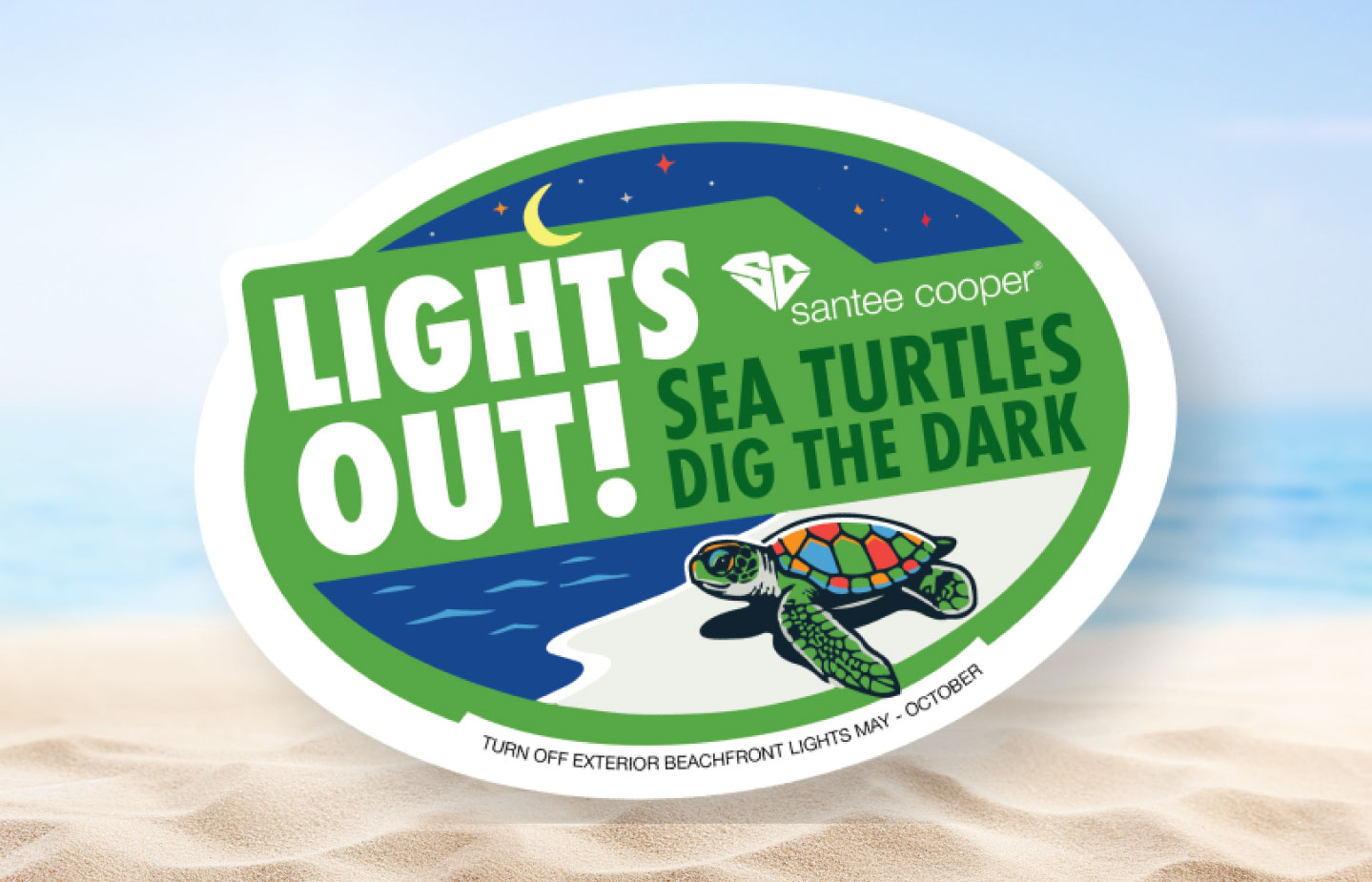
Santee Cooper partners with SCUTE to protect sea turtles along South Carolina’s coast. Through its Lights Out program, Santee Cooper helps shield beachfront lighting and provides free reminder stickers encouraging lights to be turned off after 10 p.m. during nesting season, reducing disorientation for turtles and hatchlings. Santee Cooper also supports public education by sharing conservation information and working with SCUTE volunteers to help inform people of their efforts.
The Loggerhead Sea Turtle
Several species of sea turtles can be found around the world, but the loggerhead sea turtle is the most common species nesting along South Carolina’s shores.
Adults can weigh up to 300 pounds, and the species has existed for more than 150 million years. Every two or three years, female loggerheads return to shore to nest, often laying four or five nests in a single season. Each nest contains around 120 eggs.
Across the South Carolina coast, SCUTE volunteers record more than 100 loggerhead nests and over 12,000 eggs each year. While around 70% of those eggs hatch, only a small number survive long enough to reach adulthood.
Protecting Nesting Sea Turtles
A lot of SCUTE’s work happens behind the scenes. Volunteers spend hours monitoring beaches, identifying nesting activity and protecting nests from threats such as flooding, predators and human interaction. Nests located in areas vulnerable to tides or heavy foot traffic are carefully relocated to improve their chances of success. Volunteers also help document the activity and respond when turtles are found injured or stranded.
One of the biggest challenges surrounding sea turtles is light. Females prefer dark beaches, and hatchlings rely on light reflecting off the ocean to find their way to the water. Bright beachfront lights can confuse both mothers and hatchlings, leading them away from the ocean.
Due to the efforts of SCUTE, Georgetown County and the Town of Pawleys Island have adopted ordnances designed to limit beachfront lighting and create safer conditions for sea turtles.
How can we help?
Protecting sea turtles isn’t just a job for conservation groups, it’s a job for beach visitors too.
There are very simple tasks everyone should do to create a safer environment for sea turtles:
- Leave only your footprints.
- Fill in holes before leaving the beach.
- Knock down sandcastles.
- Remove beach chairs, tents, umbrellas and toys.
- Pick up litter and dispose of trash properly.
- Turnoff beachfront lights at night when possible.
- Observe sea turtles from a distance and never touch or disturb them.
Items left on the beach can create obstacles for nesting turtles and hatchlings. Plastic bags and balloons are especially dangerous because they can resemble jellyfish, one of the sea turtle’s primary food sources. Even something as simple as a hole from digging in the sand can become a barrier for a hatchling trying to reach the ocean.
Why does this really matter?
Sea turtles, specifically loggerheads, have called the South Carolina coast home for generations. Despite their effort, they face growing challenges that make conservation efforts super important. The loggerhead sea turtle is South Carolinas state reptile and has been on the endangered species list since 1978. While their biggest predator used to be sharks, now it is manmade.
That’s why the work of SCUTE volunteers truly matters. Through education, conservation, and hands-on efforts, SCUTE continues to make a lasting impact on South Carolina. By working together we can help protect sea turtles and ensure future generations can experience the beauty and wildlife that makes South Carolina so special.
Santee Cooper provides free, colorful “Lights Out” stickers to remind property owners and visitors to turn off beachfront lights after 10 p.m. during nesting season.
For more than 90 years, Santee Cooper has been serving the people of South Carolina. The utility is South Carolina’s largest power provider and the ultimate source of electricity for 2 million people across the state. Through its affordable, reliable and environmentally responsible electricity and water services, and through innovative partnerships and initiatives that attract and retain industry and jobs, Santee Cooper helps power South Carolina. To learn more, visit www.santeecooper.com and follow #PoweringSC on social media.